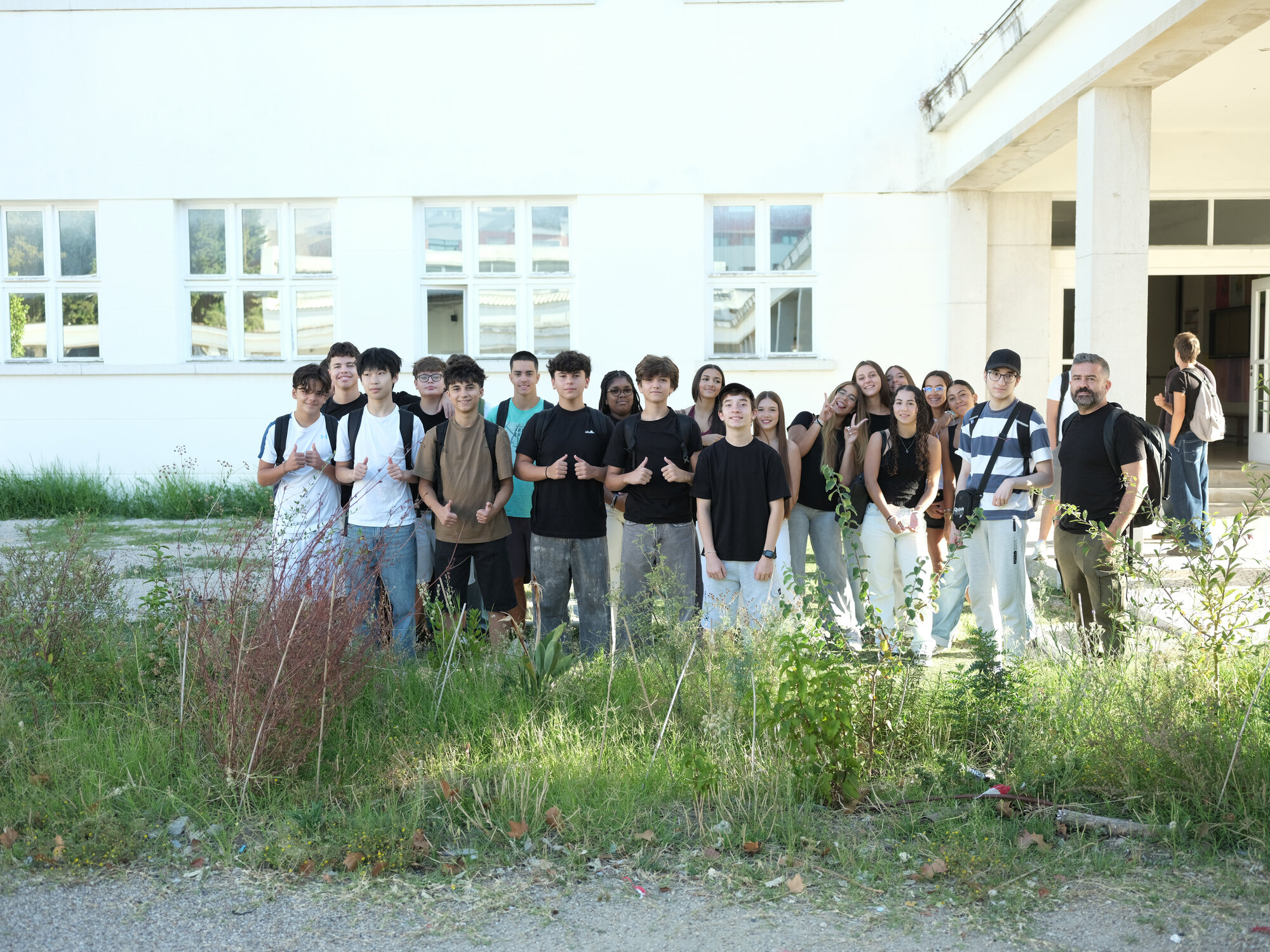
Autumn officially begins today — and it is also the first anniversary of one of the youngest urban mini-forests in Portugal. Exactly a year ago, in a corner of the wide courtyard of Escola Secundária Sebastião da Gama, in Setúbal, around 150 native trees and shrubs turned 50 m² of ground into a miniature climate refuge. We went back to the site on this symbolic date to see what has changed.
A wide courtyard, a corner waiting to be used
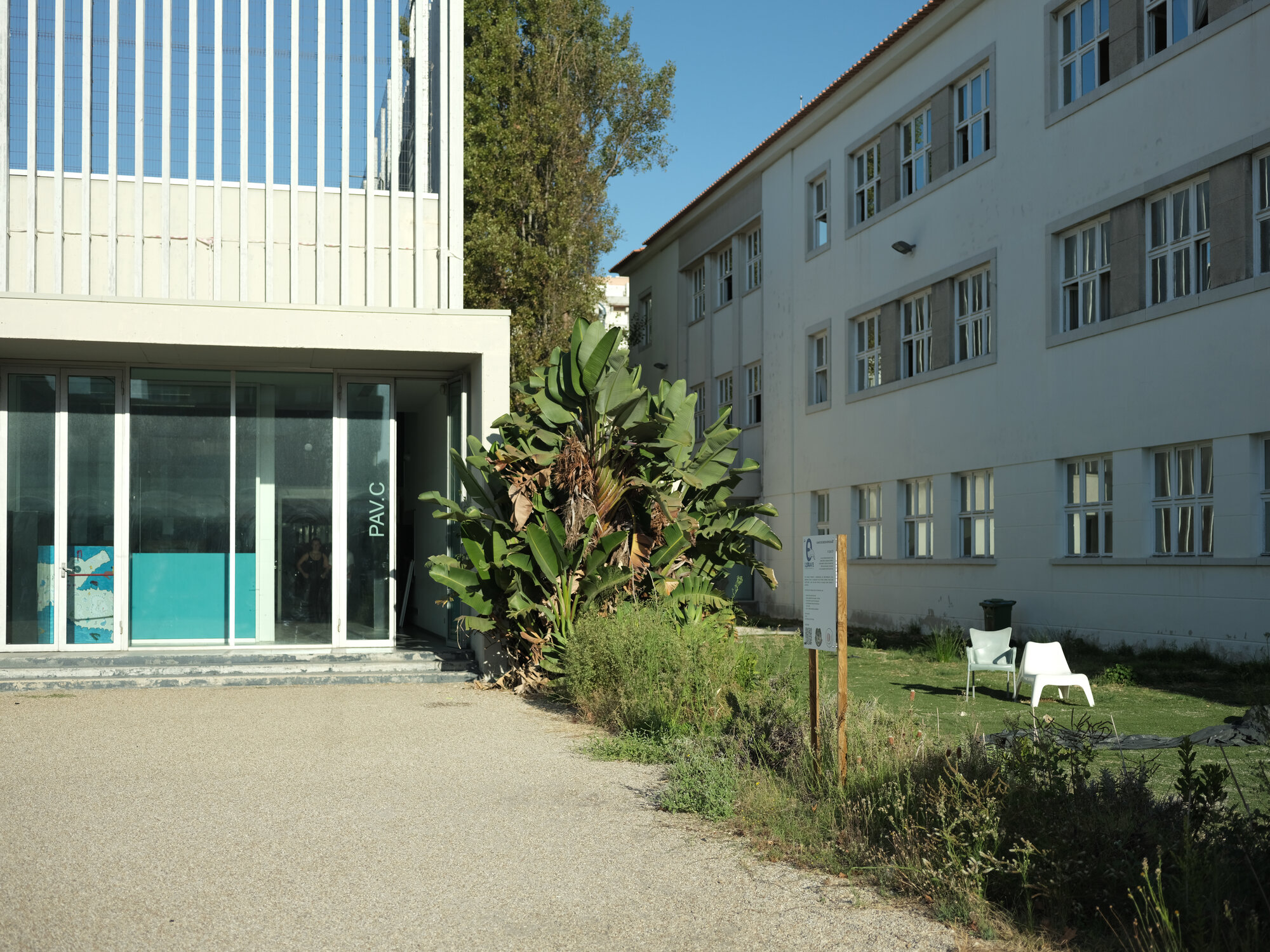
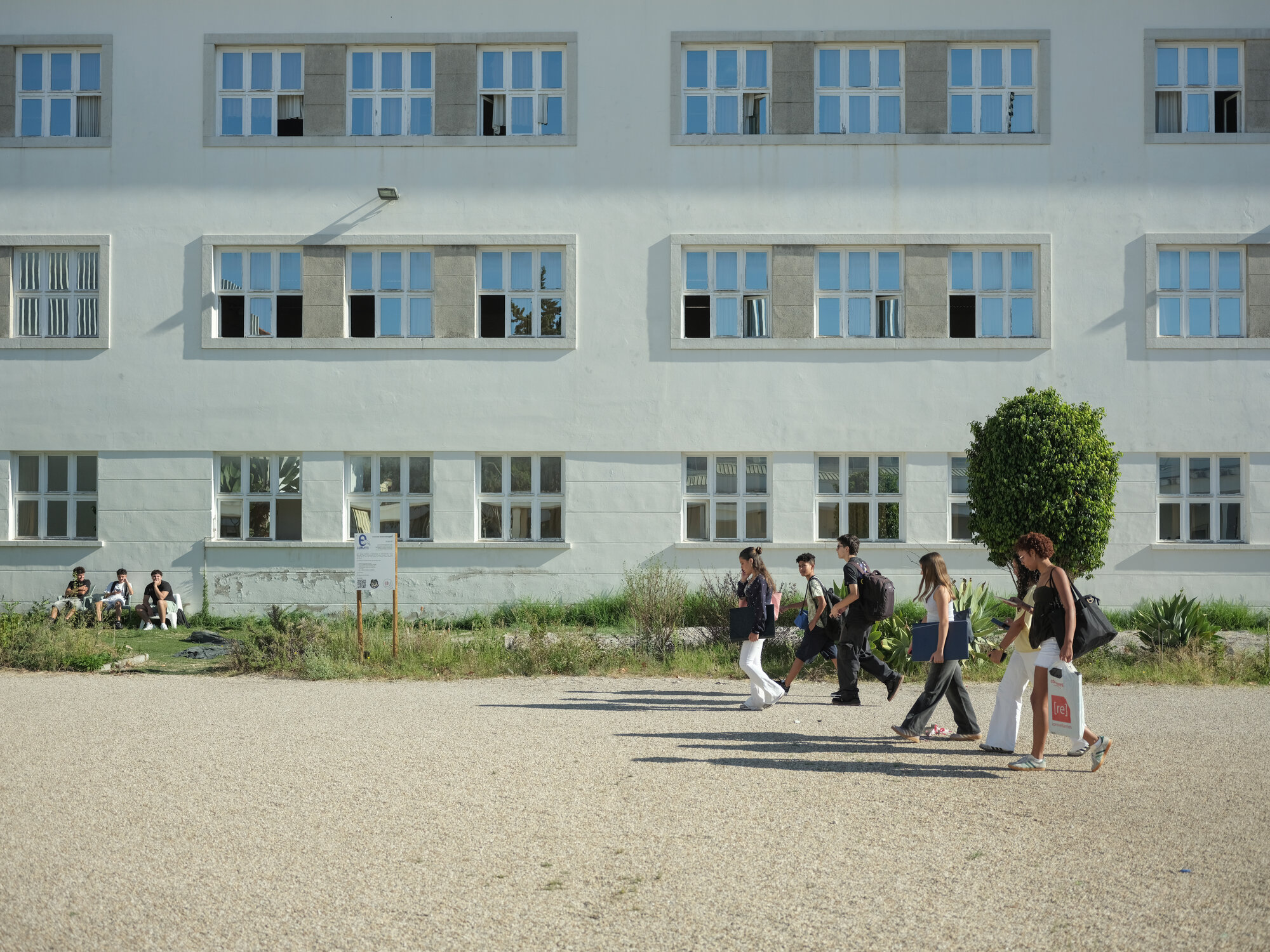
Before the planting, this patch of the courtyard wasn't being used for anything in particular: bare, compacted ground, wild grasses, a corner nobody crossed with any purpose. There was no construction work and no building plan — there was simply open space waiting for another function.
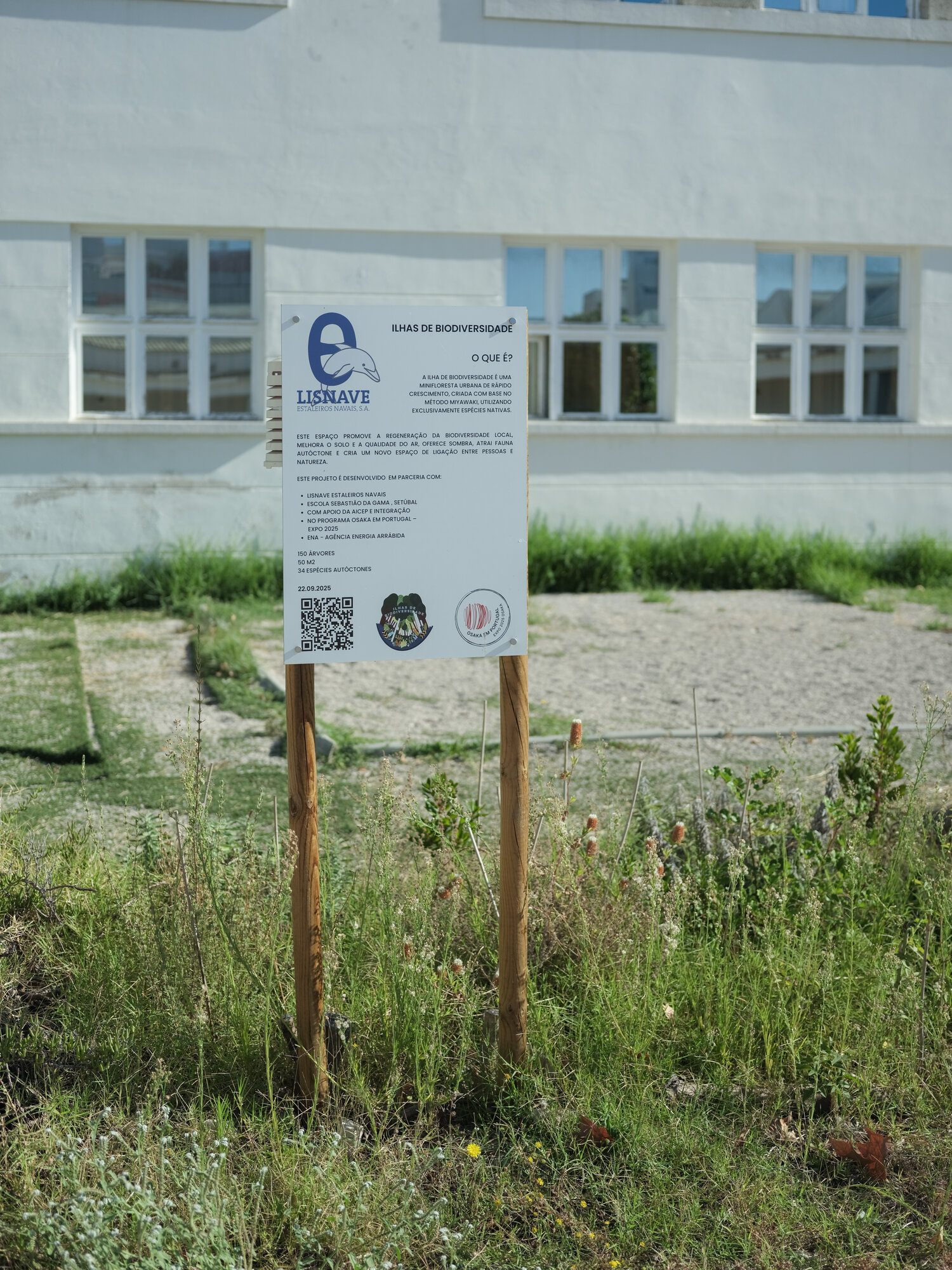
In September 2025, students, teachers and partners traded that wait for an afternoon of shared work: holes, compost, and around 150 native trees and shrubs planted side by side, following the Miyawaki method.
What a year changes
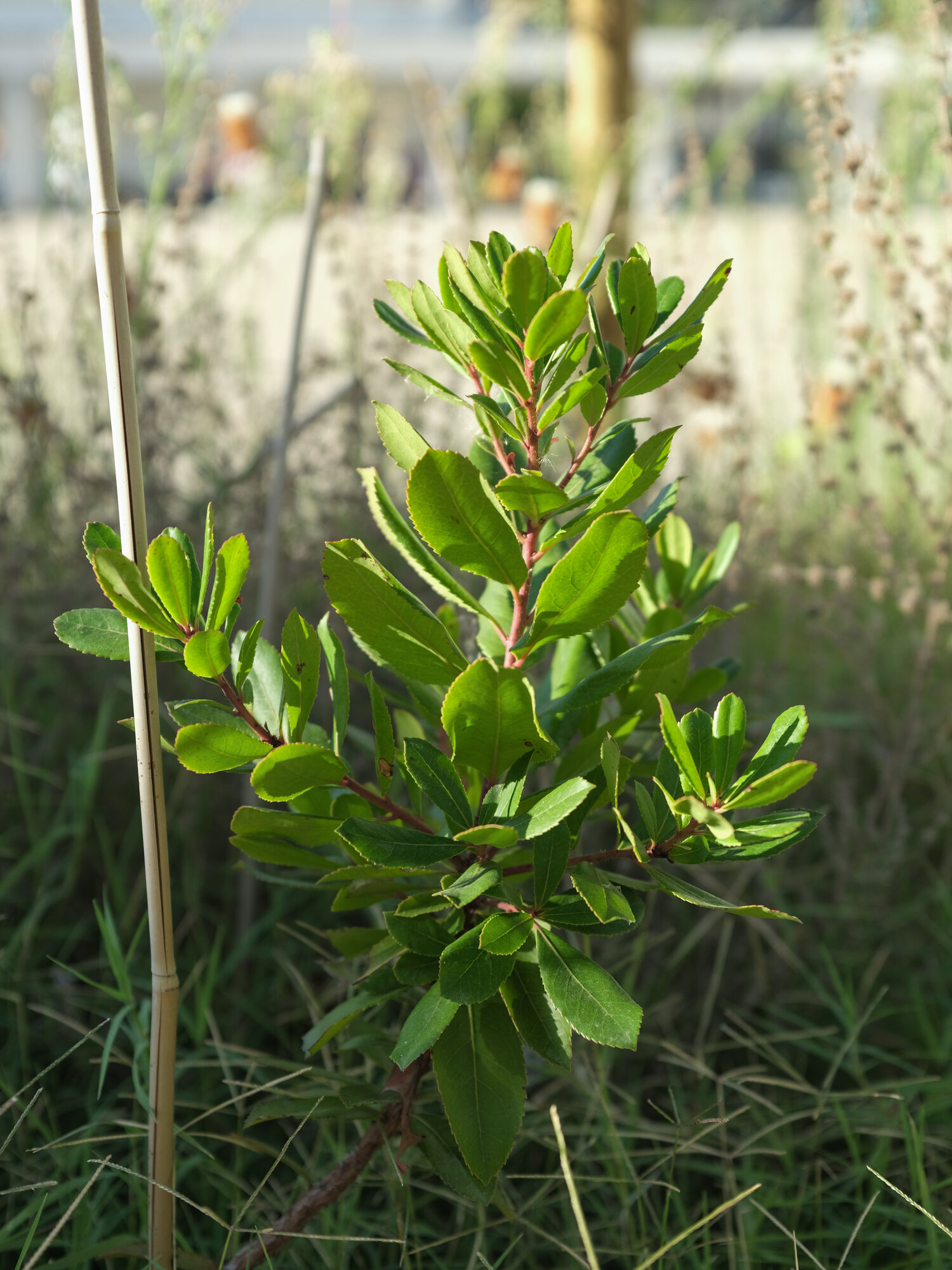
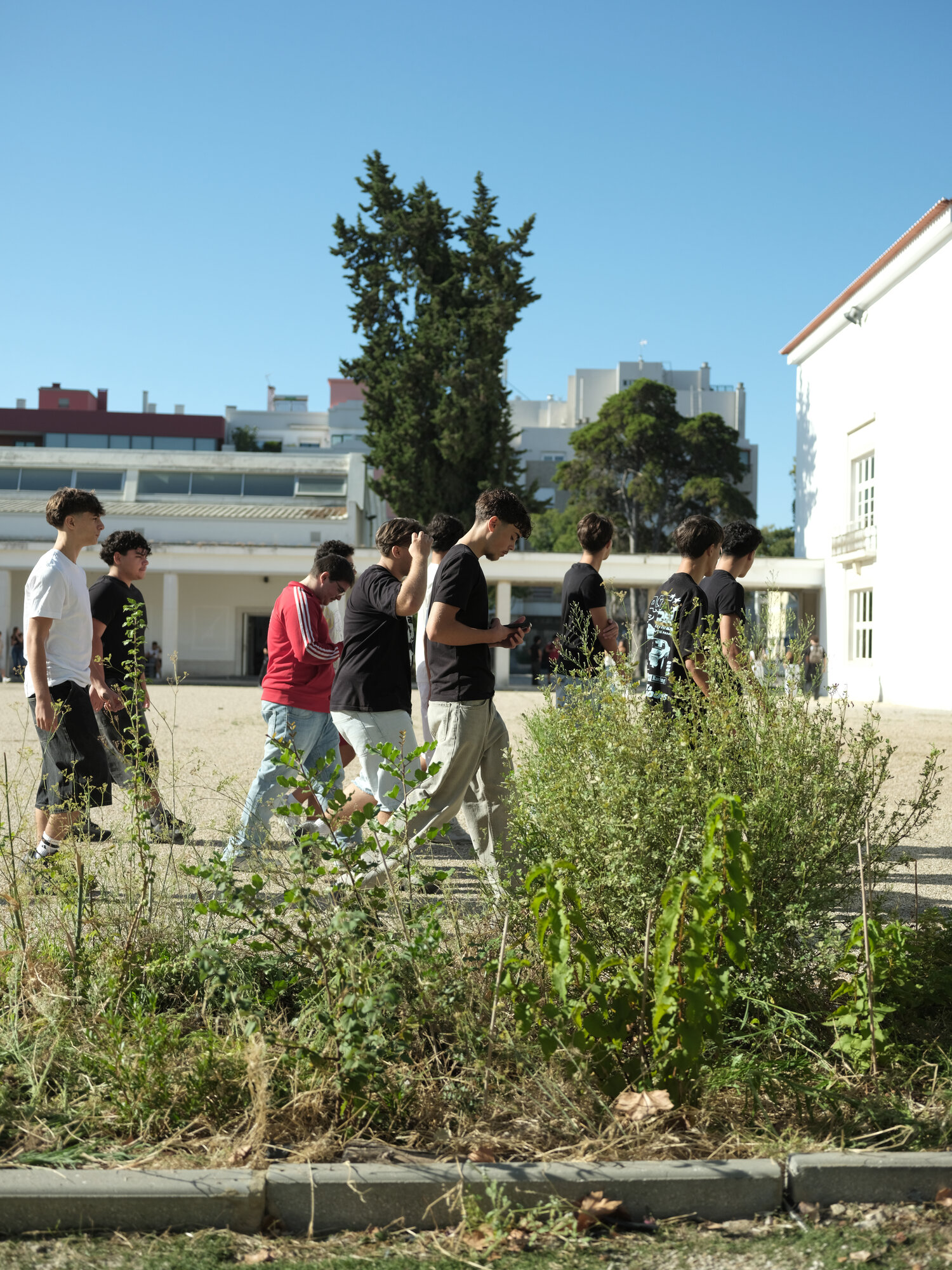
A year on, the contrast is visible to the naked eye. Where there was bare soil, there is now a dense tangle of green — some species already taller than the people who planted them, others still taking shape next to the bamboo stakes holding them up while they root.
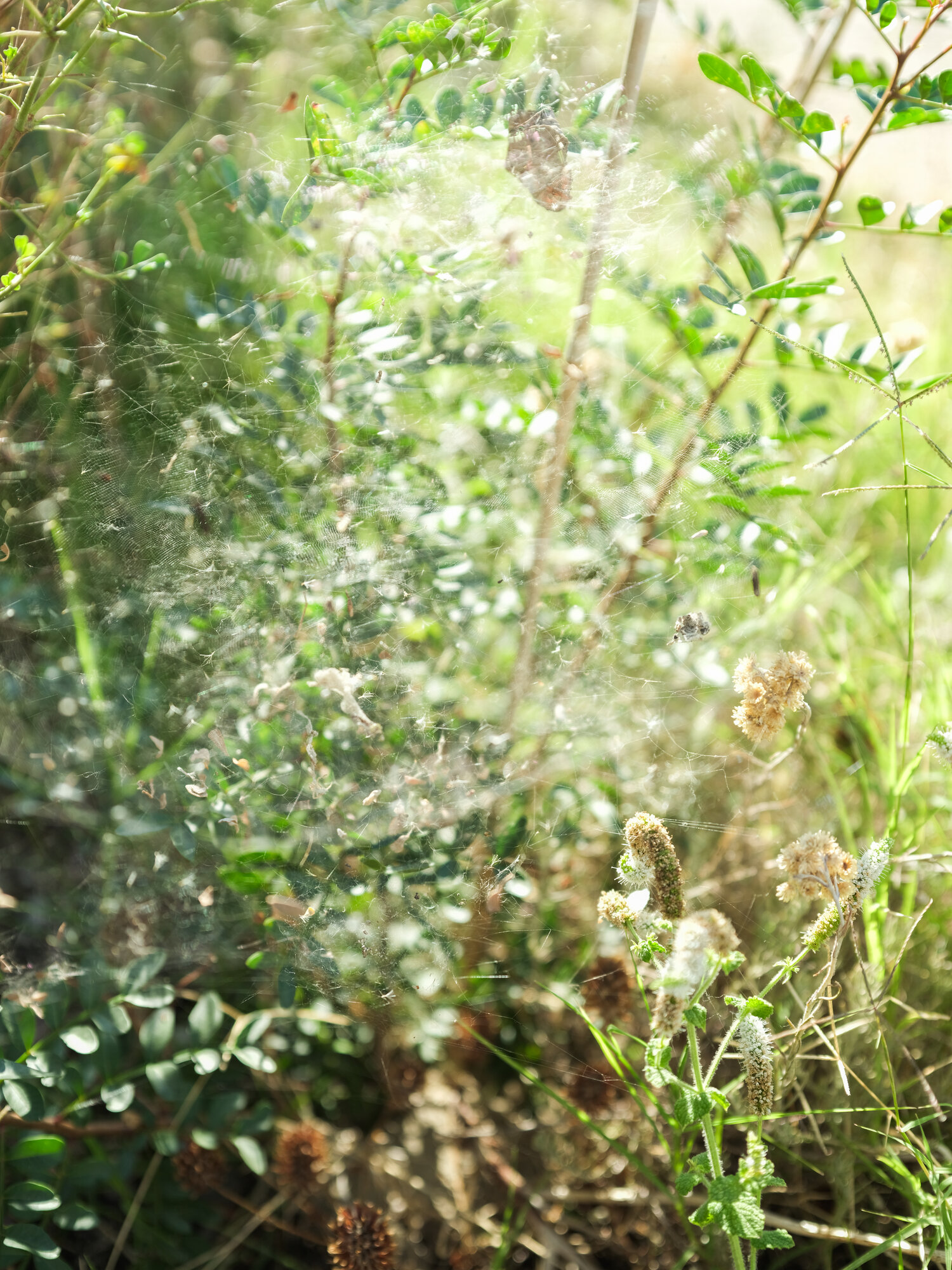
The most recent photographs, taken on the anniversary itself, show that growth up close: new leaves, branches crossing over each other, and around them, the first signs of late summer — webs and seeds hanging in the light, among dry grass and vegetation still holding its green.
Autumn as the first real test
An urban mini-forest isn't measured only by how tall its trees grow. It is also measured by how it behaves when the season changes. Autumn brings less extreme heat, more rain, and falling leaves that return nutrients to the soil — the first real test of self-sufficiency since the intensive watering of the first months was scaled back.
On this island, Ecowitt sensors installed on site continuously measure soil moisture and air temperature. That data will help confirm whether the mini-forest can get through autumn and winter with less and less outside support — the difference between a garden that depends on maintenance and a climate refuge that sustains itself.
The guardians carry on
Responsibility for this island was never just the adults' to carry. From day one, several 8th-grade classes took on the role of guardians of the forest — and they keep coming back, watching what has grown, what has flowered, what has changed since their last visit.
This planting brought together Lisnave, ENA — the Arrábida Energy Agency — and Setúbal City Council, and it was born as part of the "Osaka in Portugal" programme, within Expo 2025 — connecting this schoolyard to an international framework of cooperation between Portugal and Japan, the country where the Miyawaki method originated.
One among many urban mini-forests
This is one of nine urban mini-forests already planted by Ilhas de Biodiversidade in Portugal — each one a small climate refuge inside a space that would otherwise go unused: a shipyard, a school courtyard, a university's technical grounds. The autumn beginning today will pass through all of them, and we'll keep documenting what it reveals.
See this island
Escola Sebastião da Gama → full page, data and photographs since planting day
Also read


