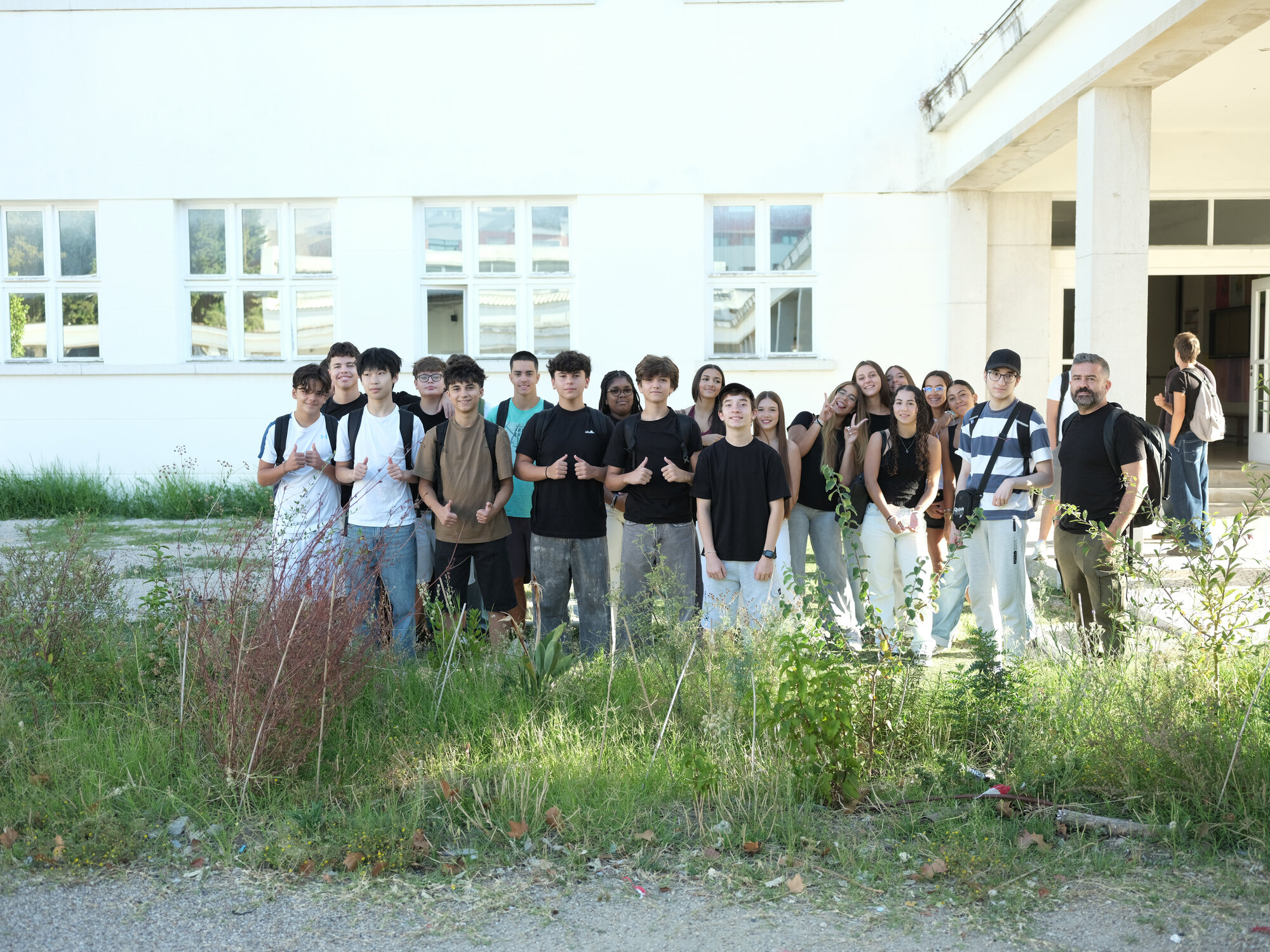
6 months ago, the students of Escola Secundária de Amora planted this island. This week, we came back together for the first maintenance session to close the school year.
We cleared spontaneous weeds, measured species growth, and analysed the first data from the Ecowitt sensors installed in the area since March 2026.
What the data shows
At the same height (2 metres), the school's cement courtyard is consistently 0.5°C to 1°C warmer than the inside of the mini-forest — a concrete example of vegetation's role in local thermal regulation.
As for the soil: moisture outside the mini-forest sits at 19%, while in the area with 5 clay pots (Olly Water olla irrigation system) it holds at 32%.
Data for the classroom
This data will be available for use in classes next school year — a concrete way to connect science, local climate, and the forest the students planted with their own hands.
This is exactly what sets a scientifically monitored island apart: it's not just a garden. It's a living laboratory, in the school courtyard, with real data.
Acknowledgements
A special thanks to Professor Rui Laureano, his fellow teachers, and the school's management for their continuous support and for the students' commitment to this project.
One more island, one more community involved in urban regeneration — step by step, 50m² at a time.


Also read